How to reset a CCleaner account password
Use the password recovery flow associated with your actual CCleaner account and confirm that you can receive email at the registered address.
This guide explains a cautious way to diagnose the issue, avoid unnecessary changes, and confirm whether the result is resolved. CCleaner product editions and account options may differ, so always check the labels shown in your installed version before proceeding.
Understand the problem before changing settings
Write down what you expected to happen, what actually happened, and the last successful attempt. Note the Windows version, CCleaner edition, and any message shown on screen. This distinction matters because an account sign-in failure, a local application error, and a purchase entitlement problem may require completely different solutions.
When a step mentions an account, purchase, or license, use only the verified service associated with your own transaction. This website does not provide a CCleaner sign-in form or ask for confidential credentials.
Step-by-step troubleshooting
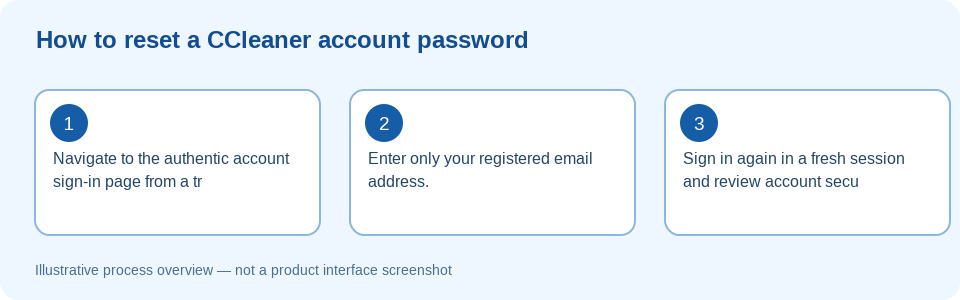
- Step 1. Navigate to the authentic account sign-in page from a trusted source. Take note of the result before moving to the next step; a changed symptom can identify the underlying cause.
- Step 2. Select the password recovery option if it is presented for your account type. If this step does not apply to your edition, skip it rather than selecting a similarly named but unrelated control.
- Step 3. Enter only your registered email address. When changing a setting, record its previous value so you can reverse the change if needed.
- Step 4. Check the inbox and spam folders for the recovery email; avoid repeated requests that may invalidate older links. Take note of the result before moving to the next step; a changed symptom can identify the underlying cause.
- Step 5. Open the newest recovery link and set a unique password. If this step does not apply to your edition, skip it rather than selecting a similarly named but unrelated control.
- Step 6. Sign in again in a fresh session and review account security. When changing a setting, record its previous value so you can reverse the change if needed.
How to confirm the result
Repeat the original task once after completing the relevant steps. Confirm that the same error no longer appears and that the expected feature or account state is working. If the issue involves a charge, subscription, or license, verify the result against the appropriate receipt or account record rather than relying only on an on-screen message.
Common mistakes to avoid
- Resetting the password on an unrelated website.
- Reusing a compromised password.
Use reversible changes first. If you are unsure whether a step could remove personal data or alter Windows behavior, back up important information and seek product-specific guidance before proceeding.
Frequently asked questions
What should I check first?
Start with the exact symptom described in this guide: Use the password recovery flow associated with your actual CCleaner account and confirm that you can receive email at the registered address.
Should I disable security software to fix it?
No. Keep Windows and endpoint protections enabled. Investigate specific block messages and follow your organization’s policy.
What information is safe to share when requesting help?
The product edition, Windows version, exact error text, and a redacted order reference can help. Never share passwords, full license keys, one-time codes, or complete payment details.
What if these steps do not solve the problem?
Stop repeating actions that could change data or billing. Keep a record of what you tried and use verified publisher assistance for product-specific account or entitlement issues.
Related guides
- CCleaner account login not working
- CCleaner verification email not arriving
- CCleaner account email address changed or lost
For account or payment issues, never send passwords, verification codes, or complete card details to a third-party help website.